
How to Check Tire Age From the DOT Code
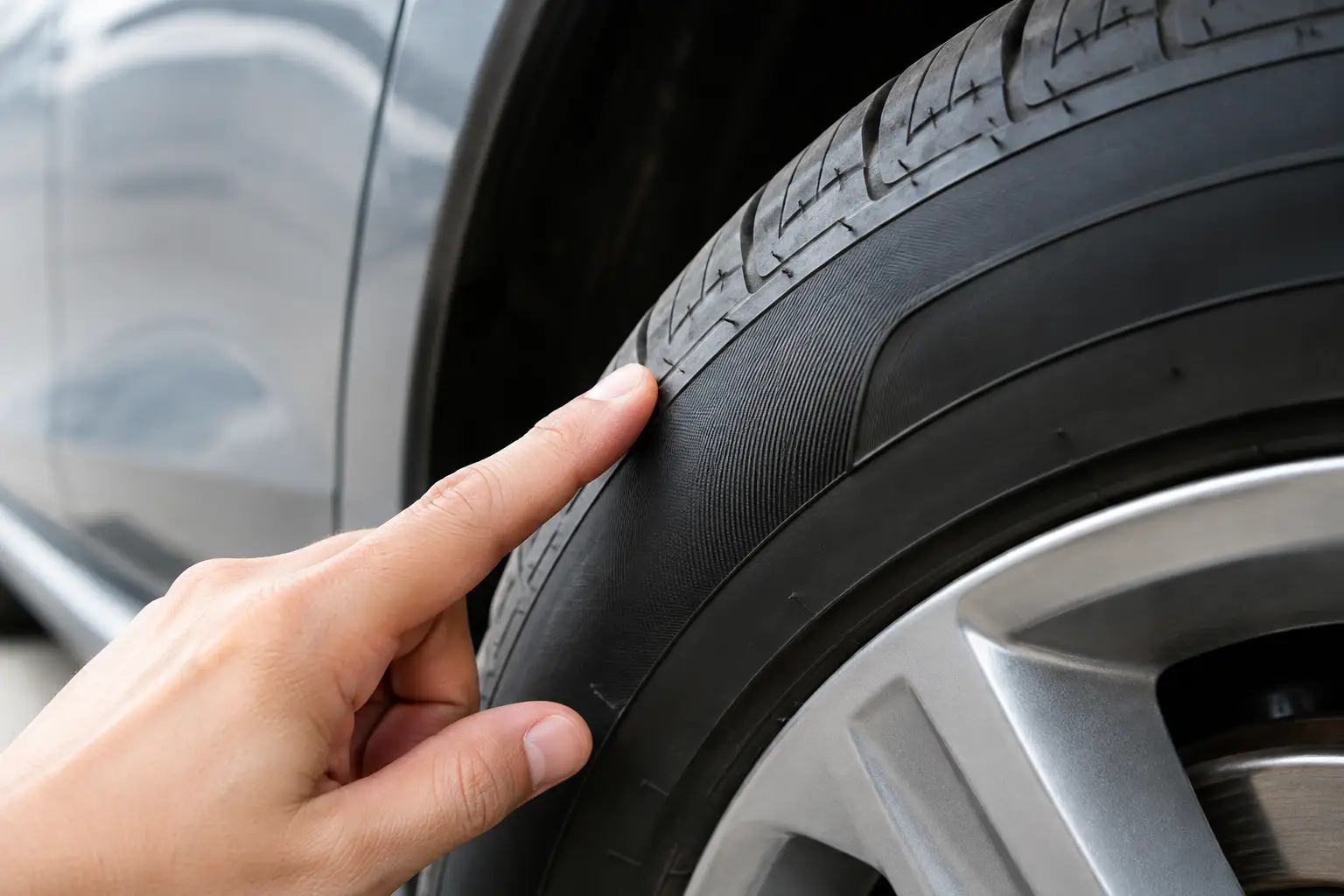
A tire can have deep tread, no obvious cracks, and still be too old for dependable service. Rubber changes over time, whether the vehicle is driven every day, parked for long stretches, or carrying a spare that has never touched the road. Knowing how to check tire age gives you a useful data point before buying used tires, inspecting a vehicle, or deciding whether an older set still belongs in service.
The answer is printed on the tire itself. Every tire sold for road use in the United States has a Department of Transportation identification number, commonly called the DOT code. Its final four digits show when the tire was made.
How to Check Tire Age on the Sidewall
Start by parking on level ground, setting the parking brake, and turning the steering wheel if that gives you a better view of the front tires. Look closely at the sidewall for letters beginning with “DOT.” The full string can be long, but the date is the final group of four numbers, usually inside a small oval or molded panel.
For example, a code ending in 2319 means the tire was manufactured in the 23rd week of 2019. The first two digits identify the week of the year. The last two identify the year.
A tire marked 0824 was made during the eighth week of 2024, roughly late February. A tire marked 4722 was made during the 47th week of 2022, roughly late November. You do not need an exact production day to make a practical decision. The week and year are enough.
The date code may appear on only one side of the tire. On many vehicles, especially with the rear tires, the complete DOT number faces inward toward the suspension and cannot be read without getting lower to the ground or looking behind the wheel. A flashlight, phone camera, or small inspection mirror can help. If the code is inaccessible, a tire shop can identify it during a rotation or inspection.
Do not confuse the DOT code with other markings
Sidewalls carry a lot of information: tire size, load index, speed rating, maximum inflation pressure, traction grades, and production codes. None of those numbers tells you the tire's age unless it is the final four-digit portion of the DOT string.
A sequence such as 225/65R17 describes size, not a date. “112T” identifies load and speed capability. Even a stamped retailer label may show an inventory date rather than the manufacturing date. Use the DOT code as the source of record.
What the Tire Date Code Does and Does Not Tell You
The date code tells you when the tire was built, not how it was treated. A three-year-old tire that spent its life underinflated in desert heat may be in worse condition than a five-year-old tire that was properly inflated, regularly driven, and stored out of direct sunlight.
That is why age should be evaluated alongside condition. Inspect the sidewalls and tread grooves for cracking, cuts, bulges, puncture repairs, uneven wear, vibration, and loss of air pressure. Check tread depth, but do not treat tread depth as the only safety measure. Tread is the visible wear surface; the tire's internal structure and rubber compounds are what age in the background.
Heat is a major factor. Tires on vehicles that sit outside in hot climates can age faster than tires used in moderate conditions. Long periods of storage also matter, particularly when a vehicle is parked with tires carrying the same load in one position for months. Spare tires deserve equal attention because they are often original to the vehicle and easy to forget.
When Is a Tire Too Old?
There is no single replacement age that applies to every tire and every driver. Tire manufacturers, vehicle manufacturers, and service professionals may provide different guidance based on tire construction, vehicle use, climate, and inspection results. Your vehicle owner's manual and the tire maker's documentation should be the first references for a specific recommendation.
As a practical rule, begin paying closer attention once tires approach six years from their manufacture date. Have them professionally inspected at least annually as they get older, even if tread appears acceptable. By around ten years from the DOT date, many manufacturers recommend replacement regardless of remaining tread, but confirm the guidance for your tires and vehicle rather than relying on a generic number.
Replace a tire sooner if an inspection finds significant cracking, a sidewall bulge, exposed cords, repeated pressure loss, impact damage, or irregular wear that cannot be corrected. Age is not a reason to ignore a more immediate defect, and a newer tire is not automatically safe just because its date code is recent.
Why old tires can fail with good tread remaining
Tire rubber contains oils and compounds designed to remain flexible. Over time, exposure to oxygen, ozone, ultraviolet light, heat, and repeated temperature cycles changes those materials. The tire can gradually lose flexibility, and its internal bonds can weaken.
This aging may first appear as fine surface cracks, often called dry rot. But the absence of visible cracks is not proof that the tire is healthy. Internal deterioration is harder to see and may show up as vibration, belt separation, or a sudden failure under load. That risk is one reason low-mileage vehicles and unused spares need an age check, not just a tread check.
Check All Five Tires, Not Just the Ones on the Ground
A proper inspection includes every tire on the vehicle, including the spare. Record the DOT date for each one because tire sets are often mixed over time. A driver may have two original rear tires, newer front replacements, and a much older spare.
Different dates are not automatically a problem. What matters is that each tire is appropriate for its position, is in sound condition, and meets the vehicle manufacturer's requirements. Still, large age differences can be a useful prompt to review the whole set, especially on all-wheel-drive vehicles where tire diameter differences can affect drivetrain operation.
Keep the dates in your maintenance records along with tire brand, model, size, installation mileage, rotations, repairs, and pressure checks. A simple record makes it easier to spot a tire that is aging out before it becomes an urgent decision. This is particularly useful for seasonal tires, trailers, collector vehicles, RVs, and vehicles with low annual mileage.
Checking Tire Age Before Buying
When buying a used vehicle, inspect the DOT code before treating “new tires” as a selling point. Tires with deep tread may have been sitting in inventory, installed after years in storage, or carried over from a previous vehicle. Ask for a clear view of each date code, including the spare.
The same applies when purchasing replacement tires. A recently manufactured tire is generally preferable, but a tire that is a year or two old may still be reasonable if it was stored correctly and priced fairly. There is no need to reject every tire that was not made this month. The key is knowing what you are buying, checking its condition, and avoiding old inventory presented as new without disclosure.
For a vehicle that sees high speeds, heavy loads, towing, or frequent summer heat, be more conservative. Those conditions place greater stress on tires and make correct inflation, routine inspections, and timely replacement more critical.
If the DOT Code Has Three Digits
A three-digit date code indicates a tire made before 2000. For example, a code ending in 328 would indicate the 32nd week of a year ending in 8. These tires are far beyond a normal service life and should not be used on public roads, regardless of appearance.
Some late-1990s tires used a small triangle after the three-digit code to identify the 1990s decade. That distinction does not change the decision: a tire old enough to use a three-digit date code requires replacement.
Before your next long trip, take two minutes to read the DOT dates, inspect the sidewalls, and log what you find. It is a small maintenance habit that gives you a clearer picture of what is actually supporting the vehicle every mile.